
Motion System Safety: Principles of Engineering Heavy Kinetic Infrastructure
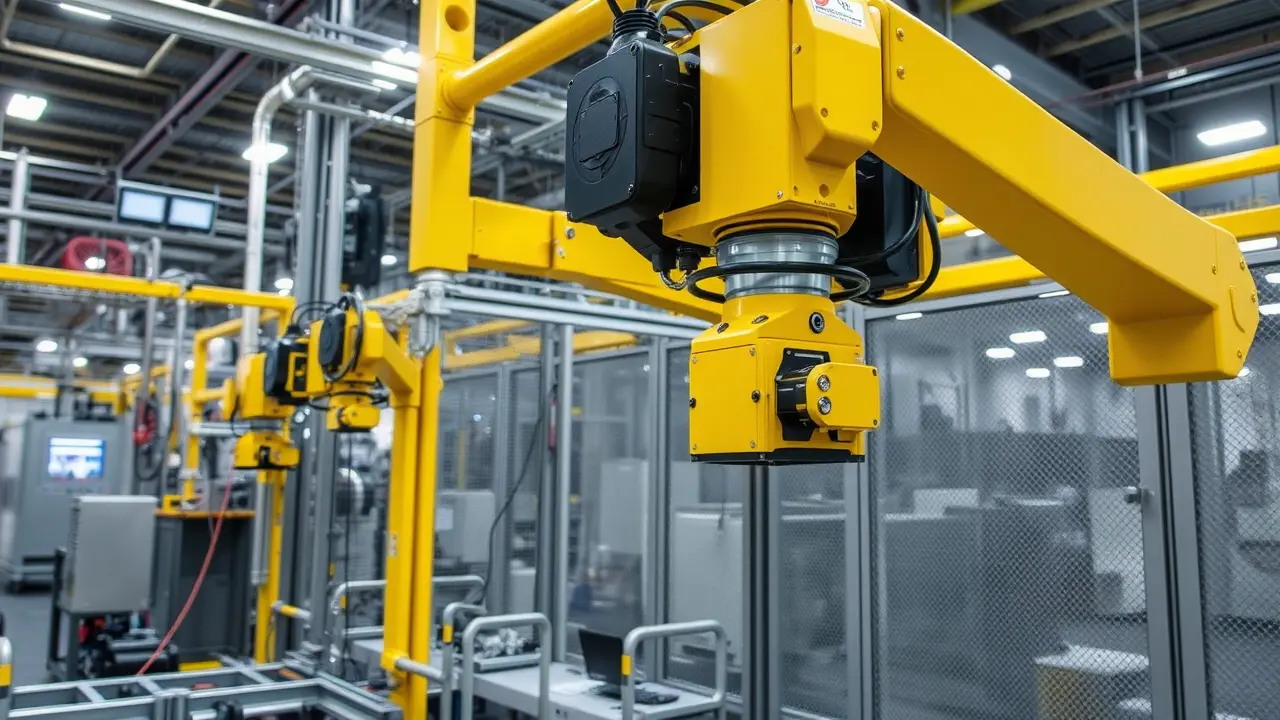
When mechanical installations transition from static architectural elements into large-scale kinetic environments, safety ceases to be an afterthought or an add-on. It becomes the foundational blueprint layer of architectural design. Moving heavy structural systems over public configurations or operating heavy automated arrays demands an uncompromised approach to fail-safe engineering.
At AXIOM, our architectural approach to motion system safety is driven by a singular mandate: complete structural, mechanical, and digital field redundancy. Here is an evaluation of the core safety architectures that govern high-capacity modern kinetic installations.
1. The Safety Integrity Level (SIL) Framework
Every automated installation we design undergoes a rigorous risk assessment profile to establish its necessary Safety Integrity Level (SIL) based on international IEC 61508 execution protocols.
By deploying dedicated industrial processing components that satisfy up to SIL 3 operational limits, we ensure that control pathways governing braking loops, structural payload limits, and real-time velocity matrices maintain a less than 1-in-10,000 probability of dangerous failure states per operating year.
"A kinetic platform cannot be deemed truly intelligent unless it possesses the deterministic safety autonomy to safely guide itself to a dead stop when anomalous parameters are encountered."
2. Multi-Tiered Mechanical Redundancy
Software algorithms and optical laser networks form the responsive digital perimeter, but the ultimate line of defense must remain absolute mechanical hardware. Heavy motion projects require active structural components designed to restrict uncontrolled load travel if prime power fails.
Dual-caliper industrial braking assemblies function smoothly on separate tracks, with each individual caliper engineered with the structural torque threshold required to safely anchor the kinetic rig at 150% maximum operating load lines. Over-travel limit switch assemblies break primary motor contactors instantly, bypassing software logic if physical grid boundaries are exceeded.
3. Deterministic Safety Software Systems
Traditional industrial building automation occasionally bundles standard environment controls and safety management software within a single computing framework. For highly populated public structures or complex theatrical installations, that model introduces unacceptable points of system vulnerability.
AXIOM utilizes standalone, deterministic safety PLCs running entirely isolated, cross-checked control logic. If an asset packet delays or an interactive design layer experiences an application exception, the underlying safety supervisor remains unimpacted, monitoring parameters at strict millisecond refresh loops.