
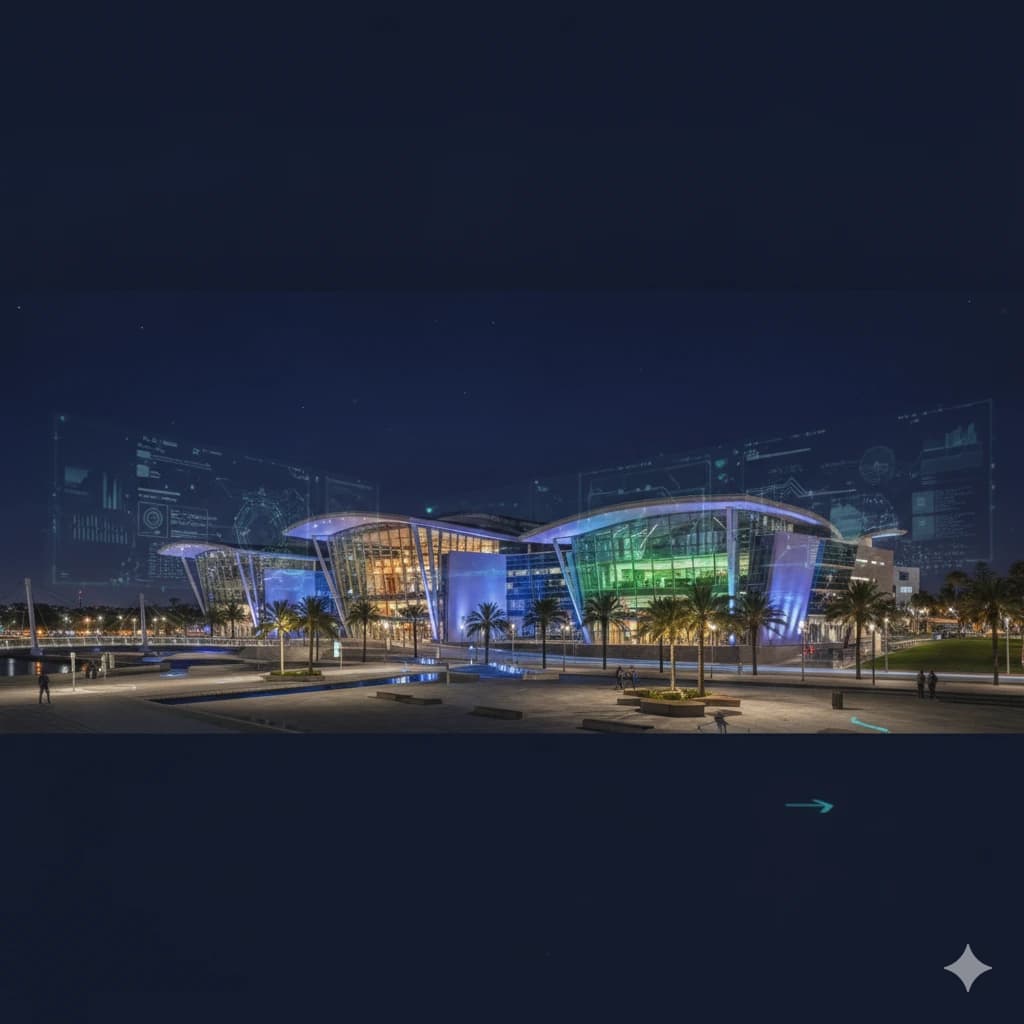
Engineering The Future Of
Intelligent Physical Environments
For decades, technology has transformed the way people interact with information. The next transformation will occur in the physical world.
Buildings, venues, infrastructure and public environments are beginning to evolve from static assets into dynamic systems. Spaces that once performed a single function will increasingly adapt, transform and respond to changing operational, environmental and human requirements.
The Shift Toward Intelligent Infrastructure
Today's most advanced environments already demonstrate the early stages of this transformation.
Airports are becoming operational platforms.
Venues are becoming adaptive environments.
Buildings are becoming intelligent interfaces.
Infrastructure is becoming connected, monitored and responsive.
The convergence of motion engineering, automation, software, sensing technologies and advanced controls is creating entirely new possibilities for the built environment.
The question is no longer whether infrastructure can adapt. The question is how intelligently it can do so.
Beyond Automation
Automation alone is not the goal.
The objective is creating environments that improve operational performance, enhance user experience and maximise the long-term value of infrastructure assets. The most successful systems will be those that seamlessly integrate:
Motion Architecture
↳Infrastructure Software
↳Human Interaction
↳Operational Intelligence
↳Into a single unified environment.
↳This requires a new approach to engineering.
One that combines mechanical systems, controls, software and operational thinking from the earliest stages of project development.
The Future Is Dynamic
Transformable Environments
Adaptive Spatial Systems
Spaces capable of adapting to changing operational requirements, evolving from static assets into flexible, multi-functional physical environments.
Responsive Architecture
Dynamic Building Interfaces
Buildings and architectural systems that physically respond to environmental shifts, climate factors, and real-time user conditions.
Intelligent Acoustic Systems
Dynamic Performance
Environments capable of dynamically optimising structural sound and acoustic insulation performance to accommodate multiple parallel uses seamlessly.
Integrated Operational Platforms
Unified Infrastructure Control
Next-generation infrastructure engines that seamlessly combine monitoring, real-time automation, and critical decision-making tools into a unified operating environment.
Human-Centred Automation
Adaptive Interface Design entirely around People
Industrial automation and software ecosystems purposefully engineered entirely around people, rather than forcing individuals to adapt to rigid technology barriers.
Our Role
AXIOM exists to help create this future.
We engineer intelligent motion environments that combine advanced mechanics, automation, software and operational systems into integrated infrastructure solutions.
- Our focus is not simply on building systems.
- Our focus is on enabling environments to perform better.
- To become more adaptable. More efficient. More intelligent. More valuable.
Looking Forward
The next generation of infrastructure will not be defined solely by its physical form.
It will be defined by its ability to respond, adapt and evolve.
The organizations that embrace intelligent infrastructure will create environments that are more resilient, more useful and better equipped to meet the demands of the future.
AXIOM is committed to engineering that future.

The Future of Infrastructure
AXIOM engineers the mechanics, automation, and software to build infrastructure that responds, adapts, and evolves. Let's design the next generation of intelligent motion together.